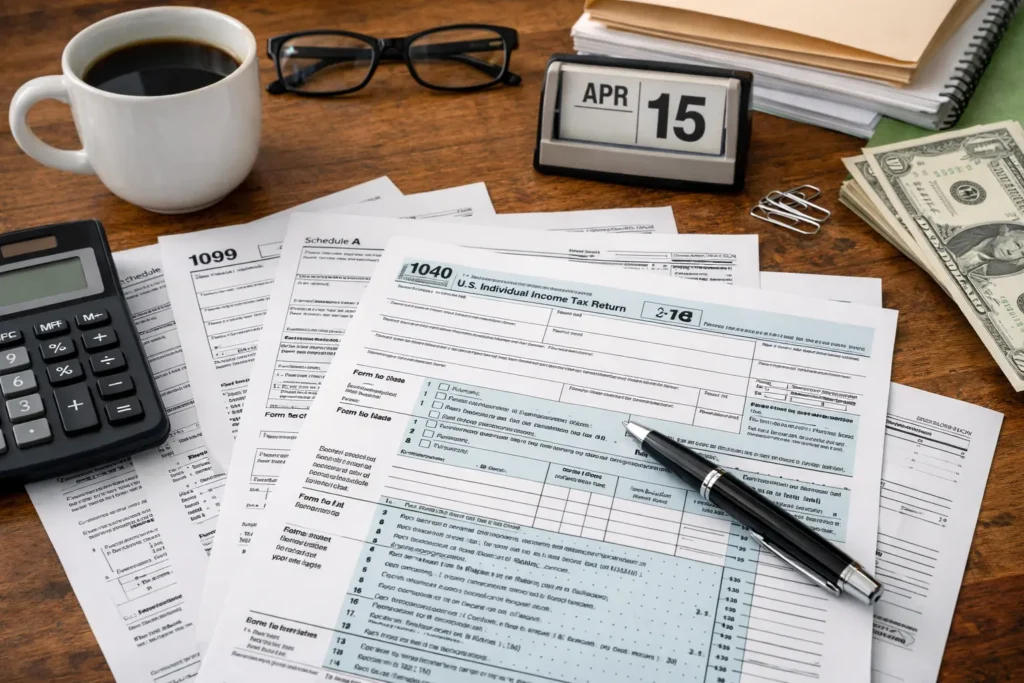
What changed in the 2026 IRS Tax Refund Schedule
The IRS updated its refund timetable for 2026 to reflect new processing rules and system updates. These changes affect when the agency issues refunds and how it prioritizes returns.
Most taxpayers will still receive refunds by direct deposit, but some returns will be flagged for additional review and slower processing. Understanding the schedule helps set realistic expectations for timing.
Why many taxpayers may wait longer for their 2026 refund
The main reasons for longer waits include added fraud checks, backlog recovery, and phased technology upgrades. Each factor can add days or weeks to normal processing times.
Key causes of delay include identity verification requests, review of complex credits, and manual checks for amended returns.
Fraud prevention and identity checks
The IRS increased automated fraud detection for 2026. Returns with suspicious patterns or mismatched information may be held while the IRS confirms identity.
If selected, you might receive a CP01A or similar notice asking for documents. Respond quickly to avoid further delay.
Backlog and staffing adjustments
The IRS continues to work through a backlog created over recent years. Even with improvements, staffing and case complexity mean some returns take longer.
Phased processing changes for 2026 mean the agency is prioritizing certain return types, which can push others down the queue.
New processing rules for credits and reconciliations
Some credits, such as the Earned Income Tax Credit (EITC) and Additional Child Tax Credit (ACTC), may trigger longer verification or refund timing. The IRS often holds refunds for returns claiming these credits until mid-February or later.
Rule changes in 2026 updated how credits are verified, adding steps to confirm eligibility before issuing refunds.
Who is most likely to experience a delay
Not all taxpayers will be affected the same way. Certain groups face higher odds of waiting longer under the 2026 IRS tax refund schedule.
- Filers claiming EITC or ACTC
- Taxpayers who file amended returns
- People with mismatched identity or withholding data
- Those who file paper returns instead of electronically
Practical steps to reduce delay on your 2026 refund
While you can’t control IRS workload, you can take steps to minimize the chance of a delay and speed up processing if issues arise.
- File electronically and use direct deposit for the fastest delivery.
- Double-check names, Social Security numbers, and bank routing details before filing.
- Respond immediately to any IRS notice with the requested documents.
- Use an IRS Online Account to check refund status and messages.
- Avoid common errors: math mistakes, missing signatures on paper forms, and entries in the wrong fields.
Filing examples that help
Using reputable tax software or a qualified tax preparer reduces errors. These tools typically validate entries and alert you to inconsistencies before you submit.
For example, e-filing through a verified provider with bank verification avoids common bank number errors that often trigger holdbacks.
The IRS often issues refunds within 21 days for simple, error-free e-filed returns, but returns claiming certain credits or requiring identity checks may take several weeks longer.
What to expect on the IRS refund timeline for 2026
Expect a phased timetable. Early-season e-filed returns with standard withholding usually clear fastest. Returns flagged for review will move on a separate track.
The IRS publishes updated estimated timelines; check the agency site for the latest guidance and projected dates for specific credits.
Timeline snapshot
- Standard e-file + direct deposit: ~21 days (if no flags)
- Returns claiming EITC/ACTC: may be held until mid-February or longer
- Amended returns: can take up to 12–16 weeks or more
- Paper returns: significantly slower, often several weeks to months
Small real-world case study
Case: Maria, a retail worker in Ohio, filed her 2026 return electronically claiming the EITC and direct deposit. Her return was selected for additional verification due to the credit claim.
She received an IRS notice asking for proof of income and Social Security verification. After she uploaded documents through the IRS portal, the refund issued six weeks later. Quick response reduced her total wait time.
When to contact the IRS or a tax pro
If the IRS refund status has not changed after the estimated time, use the “Where’s My Refund?” tool or your IRS Online Account first. This tool shows the current status and next steps.
Contact a tax professional if you receive a complex notice you do not understand or need help preparing a response. A preparer can speed resolution in some cases.
Key takeaways on the 2026 IRS tax refund schedule
- The 2026 schedule includes stronger fraud checks and phased processing, which can delay some refunds.
- File electronically, use direct deposit, and respond quickly to IRS notices to minimize delays.
- Expect the fastest refunds for simple, accurate e-file returns without credit claims that require extra verification.
Staying informed and proactive helps most taxpayers get their refunds as quickly as possible under the 2026 IRS tax refund schedule. Check the IRS website for updates and use online tools to monitor your status.